lunes, 25 de noviembre de 2013

Trading Privilege for Privation, Family Hits a Nerve in South Africa


The Hewitt family in front of their shack in the Mamelodi township, where they lived for the month of August.
By
MAMELODI, South Africa — Regina Matshega was gossiping with a neighbor over a fence between their shacks in the Phomolong squatter camp last month when a very unexpected sight suddenly popped into view: two ruddy-cheeked white South Africans, a man and a woman, with two towheaded toddlers running at their heels.  

 “I couldn’t believe my eyes,” Ms. Matshega said. “What are white people doing here? They live in the rich places. They never come this side.” 

The white couple wandered over, past the gutter overflowing with raw sewage, to say hello. They introduced themselves as Julian and Ena Hewitt, a middle-class family that lives in a gated estate in Pretoria, just six miles away. They had moved into a 100-square-foot shack with no electricity or running water next to their part-time housekeeper, Leah Nkambule, to experience what life was like in an informal settlement. 

“They said they wanted to see how we are living,” Ms. Matshega said. “Can you imagine?” 

The Hewitts moved into the shack for the month of August as an experiment in radical empathy. Could a white middle-class South African family make it on $10 a day in the kind of living conditions that millions of black South Africans endure every day? “It is one thing to know from an academic perspective what divides us,” said Mr. Hewitt, who also blogged about the experience. “But what is it like to actually live it?”
The New York Times
http://bcove.me/0u9qmau3
In most countries, a family slumming it for a month would hardly be news, but in South Africa, where deep racial divides strike at the core of the nation’s identity, the Hewitts’ experiment made headlines and spurred heated debate. 

They left behind in their comfortable suburban home everything but the barest necessities that people in squatter camps could afford. A few changes of clothes, a couple of pots, some blankets and thin mattresses were allowed. With no running water, tepid bucket baths replaced hot showers. Instead of flushing toilets, they shared a pit latrine with their neighbors. They also left behind their cars, taking local minibus taxis instead. Their children, Julia, 4, and Jessica, 2, even had to leave their toys behind. They were allowed one book to share. 

“Like so many people in South Africa, we live in a bubble,” said Ena Hewitt, a real estate agent. “We wanted to get outside that bubble.”
But stepping outside the sharp lines that define South Africa, a nation that endured decades of repressive white minority rule that brutally enforced racial division, can be a tricky business on many levels, the Hewitts soon learned. 
By Lydia Polgreen
Ena Hewitt on how the experience of living in the settlement affected her children.
Some people, especially residents of Mamelodi, the township that includes the squatter camp, have applauded the Hewitts for putting aside the comforts of their own life to see how the other half — or in this case, much more than half — live. 

“I think it’s a wonderful thing,” said Vusi Mahlasela, a prominent South African musician who also lives in Mamelodi. “We all need to understand each other better.” 

But their experiment also poked at some of South Africa’s sorest spots. Were they white slum tourists who had come to gawk at black poverty? Was this simply a publicity stunt, aimed at getting a book or movie deal — or worse still, a reality television show? 

And even if their motives were noble, did they inadvertently confirm what many here suspect: black poverty gets little notice until a white person experiences and highlights it? 

Some critics took to Twitter with outright nasty, even violent responses."You know what? Hope the paraffin stove falls over and you people burn in that shack. Bye!” tweeted someone going by the handle @Keratilwe. 

Others were more measured in their critique. 

“One would think that after 20 years of a democracy underpinned on the idea of diversity and inclusion, white South Africans would know what would be meaningful ways to engage black South Africans,” said Sibusiso Tshabalala, a young black businessman who wrote an opinion article about the Hewitts in which he referred to their experiment in township living as “Survivor Mamelodi.” 

Busi Dlamini, executive director of Dignity International, a rights group, said that the Hewitts’ motives were clearly noble, but that their experiment in township living was bound to be fraught given the history of South Africa. 

“It is what I call poverty pornography,” Ms. Dlamini said. “They put themselves at the center of the narrative that reinforces the centrality of whiteness in South Africa.” 

Osiame Molefe, a writer who is working on a book about race relations in South Africa, wrote in an e-mail that “the Hewitts’ empathy project is a performance of the privilege of being relatively wealthy and white.” He added: “They have sought out, won and accepted sympathy and praise for living the hardships others experience daily without receiving the commensurate plaudits.” 

Indeed, few have wrestled with these questions as painfully as the Hewitts themselves. 

“Ena and I laugh about this,” Mr. Hewitt said. “We just landed upon this massive social schism in South Africa.” 

Asked why his family decided to move to a shack rather than following the more traditional route of building a school or a playground in a township, Mr. Hewitt replied: “It’s very simple. We’re doing it for ourselves. We’re doing it to change ourselves.” 

His parents had been horrified that he decided to bring their young granddaughters to live in a township. After all, the Hewitts lived in a gated community, the kind of place where the wealthy shield themselves from South Africa’s violent crime epidemic. 

But the couple insisted that their children should learn to cross South Africa’s ever-present boundaries of race and class. 

“People might say it is irresponsible to bring children,” Mr. Hewitt said. “But I would rather say it is irresponsible to raise children in this country who can’t cross boundaries.”
By Lydia Polgreen http://bcove.me/lwhu7shr
Julian Hewitt on the social differences between living in the settlement and in the suburbs of Pretoria.

Among the most immovable legacies of apartheid are the rigid geographic boundaries that separate the races. Far-flung, overcrowded townships like Mamelodi were the only urban places black people were permitted to live. Colored, or mixed race people, were restricted to their own areas, also on the periphery of cities. 

People of Asian descent were required to live in monoethnic suburbs as well. The nicest suburbs were for whites. 

While well-to-do black people have moved into formerly white suburbs since apartheid ended in 1994, whites have generally not reciprocated. Indeed, even poor whites have their own slums, far from black people. 

For all their irrepressible cheer, life in a shack was not easy for the Hewitts. August is the bitterest month of South Africa’s winter, and keeping warm in an uninsulated, thin-walled structure was impossible. They all slept on a pile of mattresses on the floor, fully clothed in multiple layers. Even so, in the first week the entire family had the flu. 

Keeping everyone clean without running water was a daily challenge. Ms. Hewitt, who has a washing machine at home, tried scrubbing the children’s clothes by hand, but she struggled with the task. 

“I put the girls’ clothes up on the line to dry, but my neighbors all laughed at me,” Ms. Hewitt said. “They said, ‘Those are still dirty!’ ” 

At home, the Hewitts use a gas stove that heats quickly at the flick of a wrist. In Mamelodi, the family relied on the same kind of smelly, balky paraffin cookstove their neighbors used. 

“A simple pasta that would take me 20 minutes at home took an hour and a half,” Ms. Hewitt said. 

But the biggest surprise was how expensive it was to move around. Commuting using the local transportation that most poor people rely on ate up almost half of the family’s $300 budget for the month. 

“It was really an eye-opener,” Mr. Hewitt said. “People need to realize that if they are paying minimum wage, a huge portion of that is going to transport.”
But the Hewitts said they would miss many aspects of their time in the township, which ended on Aug. 30.
By Lydia Polgreen - http://bcove.me/ypa9hyrj
Mr. Hewitt says goodbye to a neighbor in the settlement.
“There is a real sense of community, where people rely on each other and take care of each other,” Ms. Hewitt said. “That is something that we don’t have enough of back home.” 

The couple said they planned to keep up with the new friends they made. On a recent evening, Mr. Hewitt made the six-mile drive from his hilltop house back to the squatter camp to go to a lively new church the family discovered while living there.

domingo, 24 de noviembre de 2013

US ready to launch Syria strike, says Chuck Hagel

In a BBC interview, US Defence Secretary Chuck Hagel says the military is "ready to go" in responding to Syria
 
American forces are "ready" to launch strikes on Syria if President Barack Obama chooses to order an attack, US Defence Secretary Chuck Hagel says.

"We have moved assets in place to be able to fulfil and comply with whatever option the president wishes to take," Mr Hagel told the BBC.

The White House said the US would release intelligence on last week's suspected attack in the next few days.

The UK Parliament is to be recalled on Thursday to discuss possible responses.
Prime Minister David Cameron said the world could "not stand idly by" after seeing "appalling scenes of death and suffering" caused by suspected chemical weapons attacks.

The crisis follows last Wednesday's suspected chemical attack near the Syrian capital, Damascus, which reportedly killed more than 300 people.

US Vice President Joe Biden said there was "no doubt who was responsible for this heinous use of chemical weapons in Syria: The Syrian regime".

In a speech to a veterans' group in Houston, Mr Biden said that "those who use chemical weapons against defenceless men, women, and children... must be held accountable".

French President Francois Hollande said France was "ready to punish" whoever was behind the attack, and had decided to increase military support for Syria's main opposition.

At the scene

A good number of Syrians, in particular those supporting the regime, believe the visit of the UN chemical weapons investigation team is nothing but a move to justify a military attack on Syria. The opposition, however, thinks that these visits will lead to some evidence being unearthed, proving that chemical weapons have been used against civilians by the Syrian regime.

Above all, fear and discomfort are palpable among those living in the capital. People are haunted by the possibility of a Western military strike on Syria, discussion of which is dominating the headlines of satellite channels.

"I don't want Syria to become another Iraq... Enough bloodshed," cried one Syrian woman.
"We, and thousands like us across Syria, will face any country that tries to attack us," threatened a young man, pointing at his weapon, which he uses to protect his neighbourhood. "These are Syria's problems and it is up to us, Syrians, to solve them."


BBC diplomatic correspondent James Robbins says the US, UK and France will now have the larger task of building as wide a coalition as possible to support limited military action.

Meanwhile the Arab League said it held Syrian President Bashar al-Assad responsible for the attacks and called for UN action.

Syrian opposition sources have said they have been told to expect a Western intervention in the conflict imminently.

"There is no precise timing... but one can speak of an imminent international intervention against the regime. It's a question of days and not weeks," AFP news agency quoted Syrian National Coalition official Ahmad Ramadan as saying.

"There have been meetings between the Coalition, the [rebel] Free Syrian Army and allied countries during which possible targets have been discussed."

Russia and China, allies of the Syrian government, have stepped up their warnings against military intervention, with Moscow saying any such action would have "catastrophic consequences" for the region.

Syrian Foreign Minister Walid Muallem has said he rejects "utterly and completely" claims that Syrian forces used chemical weapons, and his government has blamed rebel fighters.

On Monday, United Nations weapons inspectors were fired on while investigating one of the five alleged chemical weapons attack sites around Damascus.

'We are prepared'
 
Mr Hagel said the US Department of Defense had provided President Obama with "all options for all contingencies".

"He has seen them, we are prepared," he told the BBC's Jon Sopel, adding: "We are ready to go."

Jay Carney says the US is weighing an "appropriate response" to the alleged use of chemical weapons in Syria.

Mr Hagel said that intelligence currently being gathered by the UN inspectors would confirm that the Syrian government was responsible for the chemical attack last week.

"I think it's pretty clear that chemical weapons were used against people in Syria," he said.

Our correspondent says Mr Hagel left little doubt that he believed the Assad government was responsible, and was ready to execute the orders of his commander-in-chief.

Models for possible intervention

  • Iraq 1991: US-led global military coalition, anchored in international law; explicit mandate from UN Security Council to evict Iraqi forces from Kuwait
  • Balkans 1990s: US arms supplied to anti-Serb resistance in Croatia and Bosnia in defiance of UN-mandated embargo; later US-led air campaign against Serb paramilitaries. In 1999, US jets provided bulk of 38,000 Nato sorties against Serbia to prevent massacres in Kosovo - legally controversial with UN Security Council resolutions linked to "enforcement measures"
  • Somalia 1992-93: UN Security Council authorised creation of international force with aim of facilitating humanitarian supplies as Somali state failed. Gradual US military involvement without clear objective culminated in Black Hawk Down disaster in 1993. US troops pulled out
  • Libya 2011: France and UK sought UN Security Council authorisation for humanitarian operation in Benghazi in 2011. Russia and China abstained but did not veto resolution. Air offensive continued until fall of Gaddafi
White House spokesman Jay Carney later said that a separate report on chemical weapons use being compiled by the US intelligence community would be published this week.

Mr Carney said that Mr Obama had a variety of options and was not limited to the use of force, adding that it was not Washington's intention to remove Mr Assad.
"The options we are considering are not about regime change," he said.

Meanwhile, warnings have been issued on sites linked to Islamist militants fighting for the rebels in Syria, saying that their leaders and training camps might also be targeted by a possible US-led attack, says BBC Arab affairs editor Sebastian Usher.

Several online sites linked to the Nusra Front and similar groups have advised militants not to hold meetings or gather in large numbers, and to change routines and locations, he says.

Western powers have made clear their distrust and dislike of groups like the Nusra Front, which have spearheaded rebel victories, although there has been no indication from the US or anyone else that jihadists would be targeted, he adds.

The UN says more than 100,000 people have been killed since the uprising against President Assad began more than two years ago. The conflict has produced more than 1.7 million registered refugees.
A handout picture released by the official Syrian Arab News Agency (SANA) on August 27, 2013, allegedly shows people gathering near a Russian aircraft loaded with humanitarian aid, food and medical supplies after its arrival at Latakia airport in Syria. Syrian and Russian media said a cargo plane arrived in Latakia to evacuate Russian citizens
Earlier on Tuesday, a Russian transport plane landed in the Syrian city of Latakia with a cargo of humanitarian aid.

The aircraft later left with dozens of Russian citizens on board, an official spokeswoman for the Russian Emergencies Ministry, Irina Rossius, told Russian news agencies.

The flight was intended to evacuate Russians who wanted to leave Syria, she added.

Map: Forces which could be used in strikes against Syria 
 
 
Country Forces available for Syria strike
US
Four destroyers - USS Gravely, USS Ramage, USS Barry and USS Mahan - in the eastern Mediterranean, equipped with cruise missiles Cruise missiles could also be launched from submarines in the region
Airbases at Incirlik and Izmir in Turkey could be used to carry out strikes
Two aircraft carriers - USS Nimitz and USS Harry S Truman
UK
Cruise missiles could be launched from a British Trafalgar class submarine
The Royal Navy's response force task group - which includes helicopter carrier HMS Illustrious and frigates HMS Montrose and HMS Westminster - is in the region on a previously-scheduled deployment
Airbase in Cyprus could also be used
France
Aircraft carrier Charles de Gaulle is currently in Toulon.
Raffale and Mirage aircraft can also operate from Al-Dhahra airbase in the UAE

Ciudad Juárez busca a una supuesta asesina de conductores de autobús 
  • Una desconocida que se autodenomina 'Diana la cazadora' se atribuye las muertes como venganza por violaciones de mujeres

Podría ser el argumento de una película o simplemente tratarse de una broma de mal gusto, pero por ahora, el personaje autodenominado Diana la Cazadora de choferes se ha convertido en una de las líneas de investigación que sigue la Fiscalía de Chihuahua (México) tras el asesinato de dos conductores de autobuses públicos en Ciudad Juárez la pasada semana.

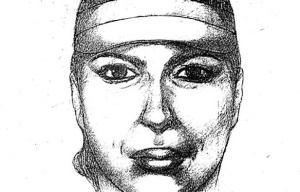
Retrato robot de la supuesta asesina 'Diana la cazadora'.

Los hechos ocurrieron el 28 y 29 de agosto en la ruta A-4, que parte de las colonias de la ciudad hasta el centro de Juárez. En ambos casos, los testigos aseguraron que una mujer fue la responsable del homicidio. Un día después, la redacción de La Polaka de Juárez recibió un correo electrónico de la supuesta asesina, que se hace llamar Diana la cazadora de choferes, donde da a entender que sus acciones son en represalia por las violaciones que los conductores de autobuses públicos han cometido contra mujeres, muchas de ellas trabajadoras nocturnas de la maquila.

“Creen que porque somos mujeres somos débiles y puede ser que sí, solo hasta cierto punto, pues aunque no contamos con quien nos pueda defender y tenemos la necesidad de trabajar hasta altas horas de la noche para mantener a nuestras familias, ya no podemos callar estos actos que nos llenan de rabia; mis compañeras y yo sufrimos en silencio pero ya no podemos callar más, fuimos víctimas de violencia sexual por choferes que cubrían el turno de noche de las maquilas aquí en Juárez y aunque mucha gente sabe lo que sufrimos nadie nos defiende ni hacen nada por protegernos”. En este sentido, la presunta autora del comunicado asegura: “Por eso yo soy un instrumento que vengará a varias mujeres que al parecer somos débiles para la sociedad, pero no lo somos en realidad, somos valientes y si no nos respetan nos daremos a respetar por nuestra propia mano; las mujeres juarenses somos fuertes”.

En seguida el correo electrónico saltó a las redacciones de otros medios de comunicación y el asunto, por sus tintes novelescos, cobró interés en todo México. El vocero de la Fiscalía de Chihuahua, Carlos González, ha asegurado vía telefónica este miércoles que aunque “no hay precedente de un personaje como este” la Procuraduría sigue varias líneas de investigación y no puede desestimar esta, por lo que la policía cibernética está rastreando el correo.

Apenas hace unas horas, el departamento de justicia publicó un retrato hablado de la supuesta homicida a partir de la entrevista a más de 20 testigos presenciales de los asesinatos. Pese a que la dependencia no quiere revelar todos los datos, sí confirma que se trata de una mujer de cabello rubio, de entre 35 y 40 años, que vestía de negro.

Ambos asesinatos se produjeron en colonias que se encuentran a una distancia de entre 10 y 15 minutos en autobús del centro de Ciudad Juárez. Según detalló la prensa local, el miércoles 28 una mujer mató a balazos a un primer conductor aproximadamente hacia las 7.45 horas en la colonia Partido Romero. Los pasajeros aseguran que el autobús 718 circulaba de poniente a oriente por la calle Ignacio de la Peña cuando una mujer le pidió el alto. El conductor detuvo la unidad y abrió la puerta para que entrara, pero nada más subir, ella sacó una pistola y le disparó varias veces. El chofer, José Roberto Flores Carrera, trató de salvarse bajando del camión para correr y pedir auxilio, pero fue abatido y quedó tirado en la calle.

El otro asesinato ocurrió al día siguiente en el autobús 744, de la misma línea, poco antes de las 8.30 de la mañana. De igual modo los disparos se produjeron nada más subir al transporte público. El conductor, Fredy Zárate Morales, tenía 32 años.

Aunque en los últimos meses la situación ha mejorado, después de 2007 el número de feminicidios y abuso contra las mujeres en Ciudad Juárez se incrementó en el contexto de la lucha contra el narcotráfico. El Centro de Derechos Humanos de las Mujeres en la entidad llamaba la atención sobre el siguiente dato hace unos meses: entre 1993 y 2007 una mujer era asesinada cada 12-14 días en todo el Estado de Chihuahua. En 2008, después de que Calderón declarase la guerra al crimen organizado, hubo un repunte de las tasas de homicidios, "en particular, de los cometidos contra mujeres". Así, en 2010 se produjo un feminicidio cada 20 horas, lo que suma un total de 446 en el conjunto del año, y el 69% de ellos tuvieron lugar en Ciudad Juárez. En 2011, hubo una muerta casi al día, con 364 fallecimientos en los doce meses. Según la Fiscalía, entre marzo de 2012 y el mismo mes de 2013, 73 mujeres fueron asesinadas en Chihuahua. Más de la mitad de ellas perdieron la vida en Ciudad Juárez.


World health report

World Health Organization Assesses the World's Health Systems

World Health Organization Assesses the World's Health Systems

The World Health Organization has carried out the first ever analysis of the world's health systems. Using five performance indicators to measure health systems in 191 member states, it finds that France provides the best overall health care followed among major countries by Italy, Spain, Oman, Austria and Japan.

The findings are published today, 21 June, in The World Health Report 2000 – Health systems: Improving performance*.

*Copies of the Report can be ordered from bookorders@who.ch.

The U.S. health system spends a higher portion of its gross domestic product than any other country but ranks 37 out of 191 countries according to its performance, the report finds. The United Kingdom, which spends just six percent of GDP on health services, ranks 18 th . Several small countries – San Marino, Andorra, Malta and Singapore are rated close behind second- placed Italy.

WHO Director-General Dr Gro Harlem Brundtland says: "The main message from this report is that the health and well- being of people around the world depend critically on the performance of the health systems that serve them. Yet there is wide variation in performance, even among countries with similar levels of income and health expenditure. It is essential for decision- makers to understand the underlying reasons so that system performance, and hence the health of populations, can be improved."

Dr Christopher Murray, Director of WHO's Global Programme on Evidence for Health Policy. says: "Although significant progress has been achieved in past decades, virtually all countries are under- utilizing the resources that are available to them. This leads to large numbers of preventable deaths and disabilities; unnecessary suffering, injustice, inequality and denial of an individual's basic rights to health."
The impact of failures in health systems is most severe on the poor everywhere, who are driven deeper into poverty by lack of financial protection against ill- health, the report says.

"The poor are treated with less respect, given less choice of service providers and offered lower- quality amenities," says Dr Brundtland. "In trying to buy health from their own pockets, they pay and become poorer."
The World Health Report says the main failings of many health systems are:
  • Many health ministries focus on the public sector and often disregard the frequently much larger private sector health care.
  • In many countries, some if not most physicians work simultaneously for the public sector and in private practice. This means the public sector ends up subsidizing unofficial private practice.
  • Many governments fail to prevent a "black market" in health, where widespread corruption, bribery, "moonlighting" and other illegal practices flourish. The black markets, which themselves are caused by malfunctioning health systems, and low income of health workers, further undermine those systems.
  • Many health ministries fail to enforce regulations that they themselves have created or are supposed to implement in the public interest.
Dr Julio Frenk, Executive Director for Evidence and Information for Policy at WHO, says: "By providing a comparative guide to what works and what doesn't work, we can help countries to learn from each other and thereby improve the performance of their health systems."

Dr Philip Musgrove, editor-in-chief of the report, says: "The WHO study finds that it isn't just how much you invest in total, or where you put facilities geographically, that matters. It's the balance among inputs that counts – for example, you have to have the right number of nurses per doctor."

Most of the lowest placed countries are in sub-Saharan Africa where life expectancies are low. HIV and AIDS are major causes of ill-health. Because of the AIDS epidemic, healthy life expectancy for babies born in 2000 in many of these nations has dropped to 40 years or less.

One key recommendation from the report is for countries to extend health insurance to as large a percentage of the population as possible. WHO says that it is better to make "pre-payments" on health care as much as possible, whether in the form of insurance, taxes or social security.

While private health expenses in industrial countries now average only some 25 percent because of universal health coverage (except in the United States, where it is 56%), in India, families typically pay 80 percent of their health care costs as "out-of- pocket" expenses when they receive health care.

"It is especially beneficial to make sure that as large a percentage as possible of the poorest people in each country can get insurance," says Dr Frenk. "Insurance protects people against the catastrophic effects of poor health. What we are seeing is that in many countries, the poor pay a higher percentage of their income on health care than the rich."

"In many countries without a health insurance safety net, many families have to pay more than 100 percent of their income for health care when hit with sudden emergencies. In other words, illness forces them into debt."

In designing the framework for health system performance, WHO broke new methodological ground, employing a technique not previously used for health systems. It compares each country's system to what the experts estimate to be the upper limit of what can be done with the level of resources available in that country. It also measures what each country's system has accomplished in comparison with those of other countries.

WHO's assessment system was based on five indicators: overall level of population health; health inequalities (or disparities) within the population; overall level of health system responsiveness (a combination of patient satisfaction and how well the system acts); distribution of responsiveness within the population (how well people of varying economic status find that they are served by the health system); and the distribution of the health system's financial burden within the population (who pays the costs).

"We have created a new tool to help us measure performance," says Dr Murray. "As we develop it further and strengthen the raw data used for these measures in the years to come, we believe this will be an increasingly useful tool for governments in improving their own health systems."

Other findings in the annual WHO report include:
  • In Europe, health systems in Mediterranean countries such as France, Italy and Spain are rated higher than others in the continent. Norway is the highest Scandinavian nation, at 11th .
  • Colombia, Chile, Costa Rica and Cuba are rated highest among the Latin American nations – 22nd, 33rd, 36th and 39th in the world, respectively.
  • Singapore is ranked 6th , the only Asian country apart from Japan in the top 10 countries.
  • In the Pacific, Australia ranks 32 nd overall, while New Zealand is 41st .
  • In the Middle East and North Africa, many countries rank highly: Oman is in 8 th place overall, Saudi Arabia is ranked 26th , United Arab Emirates 27th and Morocco, 29th.
In 1970, Oman's health care system was not performing well. The child mortality rate was high. But major government investments have proved to be successful in improving system performance. "Oman's success shows that tremendous strides can be accomplished in a relatively short period of time," says Dr Murray.

Information in the WHO report also rates countries according to the different components of the performance index.

Responsiveness: The nations with the most responsive health systems are the United States, Switzerland, Luxembourg, Denmark, Germany, Japan, Canada, Norway, Netherlands and Sweden. The reason these are all advanced industrial nations is that a number of the elements of responsiveness depend strongly on the availability of resources. In addition, many of these countries were the first to begin addressing the responsiveness of their health systems to people's needs.

Fairness of financial contribution: When WHO measured the fairness of financial contribution to health systems, countries lined up differently. The measurement is based on the fraction of a household's capacity to spend (income minus food expenditure) that goes on health care (including tax payments, social insurance, private insurance and out of pocket payments). Colombia was the top-rated country in this category, followed by Luxembourg, Belgium, Djibouti, Denmark, Ireland, Germany, Norway, Japan and Finland.

Colombia achieved top rank because someone with a low income might pay the equivalent of one dollar per year for health care, while a high- income individual pays 7.6 dollars.

Countries judged to have the least fair financing of health systems include Sierra Leone, Myanmar, Brazil, China, Viet Nam, Nepal, Russian Federation, Peru and Cambodia.

Brazil, a middle-income nation, ranks low in this table because its people make high out-of-pocket payments for health care. This means a substantial number of households pay a large fraction of their income (after paying for food) on health care. The same explanation applies to the fairness of financing Peru's health system. The reason why the Russian Federation ranks low is most likely related to the impact of the economic crisis in the 1990s. This has severely reduced government spending on health and led to increased out-of-pocket payment.

In North America, Canada rates as the country with the fairest mechanism for health system finance – ranked at 17-19, while the United States is at 54-55. Cuba is the highest among Latin American and Caribbean nations at 23-25.

The report indicates – clearly – the attributes of a good health system in relation to the elements of the performance measure, given below.

Overall Level of Health: A good health system, above all, contributes to good health. To assess overall population health and thus to judge how well the objective of good health is being achieved, WHO has chosen to use the measure of disability- adjusted life expectancy (DALE). This has the advantage of being directly comparable to life expectancy and is readily compared across populations. The report provides estimates for all countries of disability- adjusted life expectancy. DALE is estimated to equal or exceed 70 years in 24 countries, and 60 years in over half the Member States of WHO. At the other extreme are 32 countries where disability- adjusted life expectancy is estimated to be less than 40 years. Many of these are countries characterised by major epidemics of HIV/ AIDS, among other causes.

Distribution of Health in the Populations: It is not sufficient to protect or improve the average health of the population, if - at the same time - inequality worsens or remains high because the gain accrues disproportionately to those already enjoying better health. The health system also has the responsibility to try to reduce inequalities by prioritizing actions to improve the health of the worse-off, wherever these inequalities are caused by conditions amenable to intervention. The objective of good health is really twofold: the best attainable average level – goodness – and the smallest feasible differences among individuals and groups – fairness. A gain in either one of these, with no change in the other, constitutes an improvement.

Responsiveness: Responsiveness includes two major components. These are (a) respect for persons (including dignity, confidentiality and autonomy of individuals and families to decide about their own health); and (b) client orientation (including prompt attention, access to social support networks during care, quality of basic amenities and choice of provider).

Distribution of Financing: There are good and bad ways to raise the resources for a health system, but they are more or less good primarily as they affect how fairly the financial burden is shared. Fair financing, as the name suggests, is only concerned with distribution. It is not related to the total resource bill, nor to how the funds are used. The objectives of the health system do not include any particular level of total spending, either absolutely or relative to income. This is because, at all levels of spending there are other possible uses for the resources devoted to health. The level of funding to allocate to the health system is a social choice – with no correct answer. Nonetheless, the report suggests that countries spending less than around 60 dollars per person per year on health find that their populations are unable to access health services from an adequately performing health system.

In order to reflect these attributes, health systems have to carry out certain functions. They build human resources through investment and training, they deliver services, they finance all these activities. They act as the overall stewards of the resources and powers entrusted to them. In focusing on these few universal functions of health systems, the report provides evidence to assist policy- makers as they make choices to improve health system performance.

The World Health Report 2000 consists of a message from the WHO's Director-General, an overview, six chapters and statistical annexes. The chapter headings are "Why do health systems matter?", "How well do health systems perform?", Health services: well chosen, well organized?", "What resources are needed?", "Who pays for health systems?", and "How is the public interest protected?"
Miércoles, 4 de septiembre de 2013, 13:00 › WIKILEAKS EN PAGINA/12

Espías y vigilantes

Una nueva publicación de Wikileaks muestra hasta qué punto las nuevas tecnologías de espionaje masivo vulneran todas las barreras posibles del derecho a la privacidad. Se trata de la publicación de unos 200 documentos de unas ochenta empresas de la industria privada del espionaje y muestran que las nuevas tecnologías permiten espiar en tiempo real las comunicaciones de millones de personas. Programas ocultos (o “pasivos”, en la jerga) que reconstruyen al instante conversaciones de Facebook, MSN o WhatsApp, sin que se enteren ni el usuario ni el proveedor. Software que permite no sólo interceptar y grabar una conversación sino al mismo tiempo identificar quien está hablando y desde donde. Troyanos que infectan computadoras para robarles sus comunicaciones secretas y claves de encriptación. Todo lo que uno hace con el celular, internet, handy o teléfono satelital, o sea todas las comunicaciones. Todo puede ser interceptado y en algún lugar del mundo, está siendo interceptado. Ni siquiera se salva la conversación cara a cara, porque hoy se ofrecen al mercado poderosos micrófonos para escuchar a cualquiera en cualquier lado. Hasta venden equipos para pinchar satélites.
Los “Archivos de los espías” tienen tres partes. La primera contiene folletos explicativos de los productos que ofrecen las empresas. La segunda muestra algunos contratos y acuerdos de confidencialidad. La tercera es la lista de países que visitaron los principales responsables de estas empresas.

Por Santiago O’Donnell 

Los documentos, que fueron analizados en una investigación conjunta entre Wikileaks y diecinueve medios del mundo, entre ellos Página/12, muestran que no hay defensa contra las nuevas tecnologías de espionaje masivo disponibles en el mercado. Se trata, además, de una industria opaca y prácticamente sin control, que ofrece desde misiles hasta celulares para fuerzas especiales en zonas peligrosas, con botones de pánico conectados a un GPS, y sensores para detectar y enviar una señal si el usuario del celular está muerto. Al ser una industria privada no tiene control estatal y al no cotizar en bolsa no tiene el control público de las grandes empresas, aunque prácticamente sus únicos clientes son gobiernos y grandes empresas de telefonía e internet.

“La industria de la vigilancia corporativa trabaja codo a codo con gobiernos en todo el mundo : para permitir el espionaje ilegal de ciudadanos,” dijo Julian Assange, director de Wikileaks, acerca de la nueva publicación, llamada “Los archivos de los espías”, que a partir de hoy estará disponible en el sitio de Wikileaks. “Con poca supervision y sin regulaciones mandatorias este abusivo espionaje de redes nos cubre a todos contra nuestra voluntad, y, muchas veces, sin nuestro conocimiento. Wikileaks se ha comprometido a exponer y educar acerca de esta industria, con el objetivo de que juntos podamos generar el conocimiento y las herramientas para protegernos de su mirada.”

Entre los documentos más destacados es un contrato para instalar en programa FinFly en la central telefónica de la ex república soviética de Turkmenistan. El programa permite infectar computadoras con un troyano que se baja cada vez que un usuario acepta una actualización de ITunes, Winamp, Open Office o programas similares. Inclusive ofrece actualizaciones truchas disponibles que el usuario baja pensando que son de empresas reconocidas, cuando en realidad son troyanos indetectables mandados por FinFly. Los documentos muestran que la empresa Dreamlab habría instalado un servidor de FinFly en Omán.

Los “Archivos de los espías” tienen tres partes. La primera contiene folletos explicativos de los productos que ofrecen las distintas empresas. La segunda muestra alguno contratos y acuerdos de confidencialidad. La tercera consiste en la lista de países que visitaron los principales responsables de estas empresas en los últimos años a través de un seguimiento que se habría realizado de sus celdas telefónicas. Este archivo muestra que Sudamérica es por lejos la región menos visitada por estos especialistas. Apenas se registra una visita a Brasil de tres especialistas en junio pasado para participar de un seminario de entrenamiento de la empresa IPP, que se hizo para adiestrar a fuerzas de seguridad de la región en técnicas de inteligencia. La página web de IPP muestra que el próximo seminario en Brasil será en noviembre del 2015. Otro país, Chile, aparece mencionado en la parte dos de los archivos. Es en un contrato firmado entre las empresas Dreamlab y Gamma, escrito en alemán, donde se identifica a Chile, además de Suiza, Bulgaria y Hungría como clientes de Dreamlab. O sea, según el contrato, Chile sería cliente de la empresa que instaló el programa de infección de computadoras FinFly en servidores de Turkmenistán y Omán.

Los seguimientos satelitales de los empresario de la industria del espionaje también muestran ocasionales visitas a México, país que también aparece mencionado en un folleto de la empresa Thales, que explicaba como había instalado un centro de comunicaciones con capacidad para 750 policías, en la capital mexicana, una especie de call center policial para llamadas de emergencia.

Vale aclarar que ninguna de estas empresas, que se sepa, actúa de manera ilegal. En muchos países como Argentina no hay leyes contra la venta de estas herramientas, pero sí contra su uso, ya que la ley del 2010 de seguridad informática pena la “penetración” de computadoras, y sólo la Secretaría de Inteligencia está autorizada a pinchar teléfonos. Pero tanto las empresas telefónicas como los grandes proveedores de internet deben adquirir algunos de estos programas para cumplir con ordenes judiciales. Sin embargo, estos equipos de espionaje van mucho más allá de lo que ningún juez pueda pedir, al menos en Argentina, porque una cosa es ordenar el cierre de un sitio o el retiro de una foto intrusiva, otra cosa es ordenar el espionaje de chats o correos electrónicos.

Segun Eric Rabe abogado de Hacking Team, una de las empresas que estuvo en el seminario IPP en Brazil, Hacking Team se maneja con transparencia pero no puede garantizar que sus equipos se usen siempre de manera legal. “Proveemos software solo a gobiernos y agencias de gobierno,” señaló. No vendemos productos a individuos o empresas privadas. Además no vendemos productos a los países en las listas negras de EE.UU., Unión Europea, Naciones Unidas, OTAN o ASEAN. Revisamos a nuestros potenciales clientes antes de una venta para determinar si existe evidencia objetiva o sospechas creíbles de que la tecnología provista por Hacking Team sería usada para facilitar violaciones a los derechos humanos...Por supuesto, HT no puede monitorear el uso del software directamente porque sus clientes deben tener la capacidad para conducir investigaciones confidenciales. Sin embargo monitoreamos la prensa y la comunidad de activistas para saber si el producto está siendo mal utilizados. Si sospechamos que ha ocurrido un abuso investigamos. Si encontramos que nuestros contratos han sido violados u otro abuso ha ocurrido, tenemos la opción de suspender el mantenimiento del software. Sin el mantenimiento, el software rápidamente deja de ser efectivo.”

A continuación, algunos de los chiches que aparecen en los folletos de las empresas de espionaje:
--VasTech: Monitoreo masivo de telefonía satelital. Descubre la comunicación, analiza el protocolo y extrae información. Redes de telefonía móvil e internet: monitoreo masivo, almacenaje de datos de redes, reconocimiento de voces, procesamiento de datos de tráfico. Con el programa Zebra puede apoderarse de voz, SMS, MMS, email y fax. Puede almacenar “miles” de terabytes de información (Un tera mil gygas). Puede escuchar hasta cien mil conversaciones al mismo tiempo, o capturar mil millones de intercepciones por día.

—Cassidian: Misiles y sistemas antiaéreos. Sensores y radares. Equipos de detección de armas químicas y explosivos nucleares. Más de 25,000 empleados en todo el mundo en 700 proyectos en 80 países para más de 400 clientes.

--Hidden Technology: Todo tipo de aparatos y aparatitos conectados con señales de GPS, incluyendo dispositivos con imanes para pegarlos debajo de los autos.

-- Glimmerglass, NetOptic, NetQuest: Tecnología para fibra óptica. Puede interceptar los caños de fibra óptica submarinos que llevan y traen comunicaciones de un continente a otro, para interceptar comunicaciones de países enteros desde afuera de esos países, sin que los países se enteren. Por ejemplo, los servidores Gmail Hotmail o Skype están fuera de la Argentina, van y vienen por esos caños de fibra óptica y pueden ser interceptada,

--Cobham: Intercepción táctica. A medida que una persona se va moviendo, va cambiando de antena celular de donde recibe la señal. Este programa permite ir saltando de antena a antena con la pinchadura.
--Scantarget: Analiza la web en tiempo real. Busca en SMS, Twitter, Facebook, blog, foros de chat, etc. palabras claves para saber si alguien está planeando un atentado terrorista.

--IpoQue: intercepción masiva y monitoreo de red. Detecta protocolos encriptados como Skype, Bit Torrent, SSLand y túneles VPN. Puede buscar en la web hasta 25,000 palabras clave al mismo tiempo.
--Qosmos: Software que intercepta 550 mil gigabytes en tiempo real. Todas las comunicaciones de una ciudad como Trenque Lauquen caben en 200 terabytes. También permite cumplir mas de mil “reglas” o instrucciones al mismo tiempo.

--Silicom: Ofrece un “redirector” que actúa como un enchufe triple para redireccionar electricidad a más de un lugar. En este caso puede redireccionar millones de datos a otro país o a una agencia de espionaje sin que el usuario ni el proveedor de servicos se entere, usando la técnica “man in the middle” (hombre en el medio), que en este caso vendría a ser el interceptor que duplica y redirecciona la comunicación.
--Autonomy Virage: Cámaras y reconocimiento facial.

--CRFS: monitoreo de radiofrequencias. Detección de radios truchas. Intercepción de comunicaciones por radio.

---Berkeley electronics: detecta micrófonos que producen interferencias en comunicaciones por celular.

Participaron en esta investigación conjunta los siguientes medios: Al Akhbar (Líbano), Al-Masry Al-Youm (Egipto), Bivol (Bulgaria), CorpWatch (EE.UU.), Dagens Naeringsliv (Noruega), El Telegrafo (Ecuador), Fairfax (Australia), La Jornada (Mexico), La Repubblica (Italia), L'Espresso (Italia), McClatchy (EE.UU.), NDR (Alemania), Pagina/12 (Argentina), Publica (Brasil), Publico (España), RT (Rusia), Rue89 (Francia), Sud Deutche Zeitung (Alemania), y The Hindu (India). A partir de hoy "Los archivos de los espías" están disponibles en el sitio de Wikileaks: www.wikileaks.org.

Con la colaboración de los expertos en tecnología Julio López y Diego Weinstein.

WHOLE a documentary by Melody Gilbert


WHOLE takes you into the world of people obsessed with becoming an amputee. Some are "wannabes" while others succeed in ridding themselves of a limb.

They are healthy people like Kees, a Dutchman who pretends to be an amputee up to five times a day; Dan, an American who loves to hike and bike in the French Alps; and George, a man so desperate he shot off his leg with a shotgun. This courageous documentary reveals the impact the obsession has on loved ones, and also examines how medical professionals are dealing with the growing worldwide network of amputee wannabes. It dares to ask questions without obvious answers, questions about body image, cosmetic surgery, and the lengths people will go to in order to complete themselves.

http://www.whole-documentary.com

Hundreds killed in Egypt crackdown on Morsi supporters

August 14, 2013 1:44AM ET Updated 11:30PM ET
Interim Vice President Mohamed ElBaradei resigns, curfew and state of emergency declared
breaking_news
An injured Egyptian youth at a makeshift hospital as security forces attacked Morsi supporters in Cairo's Rabaa al Adawiya Square on Wednesday.
Mosaab El-Shamy/AFP/Getty
At least 281 people were killed Wednesday as Egyptian security forces attacked sites occupied for the past six weeks by protesters demanding the reinstatement of ousted President Mohamed Morsi. The state of emergency declared by Egypt's interim president amid the violence on the streets -- and the resignation from the government of interim Vice President Mohamed ElBaradei -- suggested that a protracted period of political turmoil lies ahead.


ElBaradei, a Nobel Peace Prize laureate who had backed the military coup that ousted Morsi, said, "It has become difficult for me to continue carrying the responsibility of decisions I do not agree with," and expressed anxiety over the consequences of Wednesday's security operation.

Egypt's stock exchange and banks were ordered to close on Thursday, and a curfew is being imposed in several provinces including Cairo, Alexandria and Suez.

Conflicting reports have emerged over the number of people killed. As of late Wednesday, Egypt's Health Ministry had put the figure at 281, including 43 members of the security forces, and more than 800 people injured. A nurse at one hospital reported 60 dead.

Al Jazeera's correspondent counted 94 bodies in a makeshift hospital in Nasr City's Rabaa al Adawiya Square. Egyptian state TV later reported that police had seized full control of the square.

Some members of the Muslim Brotherhood, Egypt's largest political organization, have put the death toll at up to 2,200, with about 10,000 injured. Al Jazeera could not independently verify those claims.

Among the casualties, the Muslim Brotherhood confirmed the death of the 17-year-old daughter of Mohamed el-Beltagy, one of the organization's leading political figures. Beltagy has been participating in sit-ins.

"We are facing a massacre, or even a war of genocide," Beltagy said. "I swear to God that if people don't keep protesting, [commander of the armed forces] Abdel Fattah al Sisi would just drag this country into more troubles."

Beltagy and seven other senior Brotherhood leaders were arrested at Rabaa al Adawiya Square.

The daughter and son-in-law of Muslim Brotherhood leader Khairat al Shater were also killed during the crackdown on the Rabaa al Adawiya sit-in.

The Interior Ministry said six members of the security forces were killed and more than 60 injured while attempting to break up pro-Morsi sit-ins, Egyptian state TV reported. Casualties were also reported during clashes in Fayoum district, about 60 miles south of Cairo, and in the cities of Suez and Ismailia.

Among those killed in Cairo was Mick Deane, a cameraman for Britain’s Sky News channel. Habiba Ahmed Abd Elaziz, a 26-year-old staff reporter for Xpress, a sister publication of Gulf News, was also shot dead, according to Gulf News.

Other journalists, including Al Jazeera's Abdullah Elshamy and Newsweek’s Mike Giglio, were detained for hours by security forces.

RELATED: Photos: Egypt deadly crackdown on pro-Morsi protests

The interim government praised the security forces for showing self-restraint while breaking up the protest camps, and blamed the Brotherhood for the violence. "The government holds these leaders fully responsible for any spilt blood, and for all the rioting and violence going on," the government said in a statement.

The Interior Ministry said security forces have "total control" over Nahda Square and that "police forces have managed to remove most of the tents" in the area. Security forces blocked all access to the protest camp.

In response to the operation, the Muslim Brotherhood urged Egyptians to take to the streets to "stop a massacre."

"This is not an attempt to disperse, but a bloody attempt to crush all voices of opposition to the military coup," Brotherhood spokesman Gehad al-Haddad said on Twitter.

The action follows weeks of warnings from the government that force might be used to clear the protesters. The military, which installed the government, expects a strong degree of public support for its offensive.


"They have what is likely significant popular backing for this move," Michael Wahid Hanna, senior fellow at the Century Foundation, told Al Jazeera. "But the core support for the Muslim Brotherhood and Islamists is resilient and cohesive, and more fervent than ever."

Hanna expected that the military's attempt to marginalize the Muslim Brotherhood and its supporters would backfire. "This is likely to result in greater militancy, radicalization and the spread of insurgent tactics throughout the country," he said.
A police vehicle is pushed off of the 6th of October bridge by protesters close to Rabaa al Adawiya Square on Wednesday.
A police vehicle is pushed off the Sixth of October bridge by protesters close to Rabaa al Adawiya Square on Wednesday.
Sabry Khaled/El Shorouk Newspaper/AP

International reaction

The crackdown sparked harsh criticism from the international community, particularly from Western and Arab governments that had urged the interim authorities to act with restraint and had tried for weeks to mediate a compromise.


Wednesday's action came hours after the United States had urged the government to allow Morsi supporters to protest freely. Deputy Press Secretary Josh Earnest said the White House condemns violence against Egyptian protesters, saying the crackdown makes the "path to stability harder."

"There's no question the violence we saw overnight is a step in the wrong direction," Earnest said.

Turkish Prime Minister Recep Tayyip Erdogan called on the U.N. Security Council and the Arab League to act to stop the "massacre."

The European Union called the events in Egypt "extremely worrying." "We reiterate that violence won't lead to any solution, and we urge the Egyptian authorities to proceed with utmost restraint," said Michael Mann, a spokesman for EU foreign policy-chief Catherine Ashton.

Qatar strongly condemned the security forces' attack and urged Egypt to "refrain from the security option in dealing with peaceful protests."

It was fear that Egypt would descend into chaos that spurred the efforts of Western and Arab mediators. The Century Foundation's Hanna said Wednesday's action will have raised the stakes: "I think there will be rising pressure to take more than symbolic steps to express displeasure and condemnation of today’s violence."
"This is going to be a very big challenge for the interim authorities on the international stage," he added.

Morsi became Egypt's first freely elected leader in June 2012, but a deepening economic malaise and fears over autocratic Islamist rule brought hundreds of thousands of Egyptians into the streets earlier this summer to demand his ouster.

Ehab Zahriyeh contributed to this report. With Al Jazeera and wire services