domingo, 26 de agosto de 2012

August 9, 2012 — Uruguay
Writer: Santiago Rodríguez Tarditi
Volume Listen As broadcast on The Globalist on Monocle 24
Contrary to popular belief, the best leader in the world is not Barack Obama. Sorry to break it to the Germans but it’s not Angela Merkel either. François Hollande? Not a chance. The greatest head of state these days is José Mujica, Uruguay’s president.
Better known by his nickname “Pepe”, the Uruguayan is responsible for putting his small nation of only 3.2 million inhabitants on the international map. Since he took office in 2010, journalists and locals have been raving about his forward-thinking policies, like his most recent proposal in which he announced the government will legalise and control the sale of marijuana. It’s a measure to fight the cartels that are now becoming a widespread problem in a country not used to dealing with drug wars.
As progressive as his ideas may sound, Mujica is not just another leftist character in Latin America’s political scene. He’s the personification of what true socialism should be, far from Chavez’s populist speeches and Kirchner’s demagoguery. He was a member of the Tupamaros, a leftist armed group that opposed Uruguay’s dictatorship during the 1970s (Mujica was in prison when the military junta was toppled in 1973). After a democratic transition, Mujica was named the official candidate for the Frente Amplio in 2009 and was elected president with 52 per cent of the votes, the first former guerrilla member to reach that position.
When he assumed his new role, Uruguayans knew that politics weren’t going to be the same. Mujica swore to take his country to new heights, while living a modest and exemplary life; his house is a farm in the outskirts of Montevideo, he drives a 1987 Volkswagen Beetle and donates almost 90 per cent of his salary to charity, earning him the nickname of the world’s poorest president. “There are many Uruguayans that live with much less,” he said in an interview with El Mundo newspaper. But his unpretentious lifestyle hasn’t slowed him from signing noteworthy international trade deals (25 per cent of Uruguay’s foreign trade comes from meat exports to 100 countries).
He’s also stimulated regional ties. At the latest Mercosur meetings Mujica invited Colombia, Peru, Bolivia and Ecuador to join the union to strengthen the political and economic block. His latest meeting with Brazil’s Dilma Rousseff resulted in the signing of several bilateral-agreements that include the free circulation of goods, services and people between both countries. Mujica’s growth numbers have earned him international accolades; Moody’s recently elevated Uruguay’s investment rating soon after Standard & Poor’s raised the country’s grades, quoting its positive economic prospects.
Mujica is the new face of South America’s left wing, invigorating the movement with a hard-working government that puts people before egos, turning revolutionary ideas into pragmatic actions that lead to positive results. In a summit held in 2010 in Punta del Este, Mujica invited foreigners to invest in his country. “We need businesses to prosper in our nation, companies that pay taxes and generate wealth,” he said. “Otherwise we’ll be left with just the dreams.”
Two years into his government with constant economic growth figures at around 6 per cent, it seems that Pepe’s dreams are coming true.
Santiago Rodríguez Tarditi is acting edits section editor for Monocle.

Ola de acoso sexual en El Cairo al final del Ramadán

Grupos de hombres jóvenes y adolescentes persiguen y agreden a mujeres en las calles de El Cairo

Tres chicos persiguen, tocan y acosan sexualmente a unas jóvenes que cruzan la calle en El Cairo, el 20 de agosto. / AHMED ABDELATIF (AP)
El final del Ramadán, una fiesta conocida como Aid el Fitr, es una fecha proclive al desenfreno, pues pone fin a un duro mes de ayuno en el que para los musulmanes está prohibido comer y beber durante las horas del día. En El Cairo, centenares de jóvenes, muchos de ellos adolescentes, aprovechan la ocasión para cometer agresiones sexuales en plena calle. Algunos de ellos actúan en manada, lo que dificulta que las víctimas y sus acompañantes puedan defenderse.
Si bien el problema no es nuevo, durante los últimos años se ha convertido en una verdadera epidemia. El sentimiento de impunidad de los agresores es tal, que las zonas de mayor riesgo son especialmente concurridas, como el centro de la ciudad, en los alrededores de la mítica Plaza Tahrir, los cines, o parques públicos.


Un grupo de chicas sufre el acoso de decenas de jóvenes en un parque de El Cairo durante la festividad de Aid el Fitr, el 20 de agosto. / SAMUEL MOHSEN (AP)
Después de ignorar la lacra del acoso sexual durante mucho tiempo, la sociedad egipcia está empezando a tomar conciencia de la gravedad del problema. Según el periódico Masry al ium, la policía ha efectuado durante las últimas horas la detención de 32 jóvenes por haber ultrajado a mujeres, mientras se multiplican las llamadas por parte de diversos sectores de la sociedad a endurecer las penas por este tipo de delitos.


Dos jóvenes intentan deshacerse de varios hombres en una calle de El Cairo el 19 de agosto, primer día de celebraciones por el final del Ramadán. / SAMUEL MOHSEN (AP)

Durante los últimos meses, la sociedad civil ha lanzado diversas iniciativas para concienciar a la población e intentar reducir la dimensión del problema. Entre las acciones más imaginativas, figura la creación de una página web que incluye un mapa que indica qué zonas de la ciudad son las más peligrosas, el llamado harassmap. Además, se ha creado un grupo, el Imprint Movement, que durante los últimos tres días ha desplegado grupos de voluntarios en estaciones de metro y parques con la finalidad de disuadir a los agresores.

Pussy Riot: Garry Kasparov faces jail threat over claim he bit policeman after arrest over demonstration

Garry Kasparov could be charged with an offence that carries a five year jail term after accusations that he bit a police officer during a demonstration supporting Pussy Riot.


Mr Kasparov, 49, a Russian democracy activist and former world chess champion, was one of up to 100 people detained by police close to Moscow's Khamovnichesky Court on Friday, where a judge sentenced three members of the feminist anti-Kremlin group to two years in a correctional prison colony.
Police sources told Russian media that Mr Kasparov, who claims he was talking quietly to journalists when he was arrested, could be charged with using violence against a state official, a criminal indictment that carries a maximum custodial sentence of five years, after allegedly biting a policeman's hand. Mr Kasparov dismissed the accusation as "drivel".
About 2,000 demonstrators gathered close to the court in support of the Pussy Riot three - Nadezhda Tolokonnikova, 22, Maria Alekhina, 24, and Yekaterina Samutsevich, 30 - who were jailed for conducting a "punk prayer" in Moscow's main cathedral in February, during which they urged the Virgin Mary to "drive out Putin".
Their prosecution provoked a wave of international protest, with the US and British governments joining celebrities such as Madonna and Sir Paul McCartney in condemning the trial as an attack on political freedom.
 Violetta Volkova, one of Pussy Riot's defence team, said yesterday that the three were in good spirits as they prepared to be transferred from pre-trial detention to a prison colony. "They are not disheartened," she said. "They were ready for this verdict; in fact they were calming us lawyers down after it was pronounced."
Video footage from the Moscow rally in support of Pussy Riot shows riot police dragging Mr Kasparov to a minibus while he tries to resists and asks repeatedly, "What are you doing? What are you detaining me for?"
In a photograph apparently taken through a window of the van the former chess maestro can be seen grimacing as an officer presses a hand against his neck.
Pro-Kremlin media later showed Denis Ratnikov, 29, a police officer, holding up a bandaged left hand splashed with green disinfectant and claiming that Mr Kasparov had bitten him as he tried to scramble out of the bus.
But the activist, who is a co-founder of the Solidarity opposition group, said after his release late on Friday: "I want to see this officer. The suggestion that I bit him is total drivel. I tried to get free, of course, but my teeth were firmly gritted. Maybe it was a police dog that bit him?"
Police said in response they were ready to "carry out a test comparing a police dog's bite to Kasparov's teeth" in order to prove the alleged assault.
Pussy Riot say their cathedral protest was against the Orthodox Church supporting Vladimir Putin's re-election to the presidency in March.
Following the verdict the Church issued a statement calling on state authorities "to show mercy to the people convicted within the framework of the law, in the hope that they will refrain from repeating blasphemous actions."
Mr Kasparov has been ordered to report to police this week.
The Russian government has not responded directly to criticism of the trial, but the foreign ministry issued a statement on Saturday in which it said that German and Austrian law also foresaw custodial sentences for "hooliganistic pranks in buildings of prayer".

Recession and austerity fuel suicide in Italy—and the collection agency is exacerbating the situation.
In late May, Marco Turrini reached his breaking point. Out of work for more than a year and under pressure from tax collectors, the 41-year-old publicity agent picked up his 4-year-old son, Samuele, and 14-month-old daughter, Benedetta, and threw them out of their sixth-floor window in Brescia, near Milan. He then struggled to push his wife to the same fate. She escaped, but he turned to the window and jumped. He died on impact, but his two young children lived for several long minutes while neighbors tried to save them. The story is tragic, but continues to repeat itself in scenes of desperation across Italy.
On the afternoon of May 10, Arcangelo Arpino, a 63-year-old entrepreneur from the suburbs of Naples, walked into the mosaic-laden Sanctuary of the Blessed Virgin of the Rosary in Pompeii and knelt to pray in front of a painting of a crowned Madonna and child. Then he walked out to the parking lot, sat on a short stone wall, and shot himself in the head with a 7.65 caliber pistol. In his pocket were three sealed envelopes. One was addressed to the Madonna, asking her to look over his wife and children. Another was a memo explaining the complicated economic state of his Euro Costruzioni construction business. The last was to Equitalia, Italy’s national tax-collection agency, blaming them for pushing him over the edge with repeated threats and relentless tax assessments. “This is a difficult moment for so many people,” said Claudio D’Alessio, the mayor of Pompeii. “The mark of blood on the grass is symbolic of the pain this community and country feel. But there are those responsible for killing him—the national government and the regional government helped kill this man. The citizens are at their limit.”
On March 28, Giuseppe Campaniello set himself on fire in front of the Equitalia office in Bologna after he received a final notice about the doubling of a fine he could not pay. He died in a burn ward nine days later. He never had the courage to tell his wife, Tiziana Marrone, about their dire financial straits because of a mix of pride and embarrassment, she says. Marrone found his poignant suicide note: “Dear love, I am here crying. This morning I left a bit early, I wanted to wake you, say goodbye, but you were sleeping so well I was afraid to wake you. Today is an ugly day. I ask forgiveness from everyone ... A kiss to you all. I love you, Giuseppe.”
Turrini, Arpino, and Campaniello are three of more than 80 Italians whose suicides and deaths can be linked to austerity measures since the beginning of the year. Marrone managed to form a group of the grieving widows of suicide victims dubbed “white widows” by the press. Their first march was in Bologna; they walked from the charred sidewalk where Campaniello set himself alight to the burn ward where he died. They waved white flags to symbolize their surrender and many carried their husbands’ suicide notes. Marrone plans to stage marches in Rome and in the poorer southern regions of the country as the situation gets worse. “There is no way to find closure when your husband takes his life because he can’t afford to support his family,” Marrone told Newsweek. “I cannot even bear to think how desperate he must have felt to end it that way.” Her aim is to build a network of suicide victims’ family members and to call attention to the plight of Italy’s new poor.
Many more have killed themselves in Greece, which once boasted the lowest suicide rate in Europe. There, 1,727 people have killed themselves (or attempted to do so) following the financial strains of the austerity measures since 2009. The ghastly trend is on the rise in Spain, too, where the unemployment rate for people under 25 years old is now more than 50 percent, which helps explain why that age group has the fastest-growing suicide rate in that country. In Ireland, which has been in recession since 2009, deliberate self-harm rates have doubled since the crisis began. In the countries most affected by the euro-zone crisis, depression is on the rise and suicides are spreading.
“The main reason for the rise in suicides is the recession and now austerity—both making hard times more difficult and reducing funding for mental-health services,” says David Stuckler, a Cambridge professor who coauthored a report on the health effects of the economic crisis in Europe. “Usually an epidemic is thought of as a short-term increase in a disease—by that criterion, suicides would be an epidemic.”
Across the southern countries, especially, suicide has become the only way out for many people who can no longer support their families or pay their employees. Most recent suicide victims are self-employed craftsmen and entrepreneurs like Arpino, or retirees like Dimitris Christoulas, whose monthly pension was slashed in half in Greece after harsh austerity cuts. In early April, the 77-year-old pharmacist shot himself in the head, splattering blood across Syntagma Square in front of the Greek Parliament as onlookers watched in horror. “I see no other solution than this dignified end to my life so I don’t find myself fishing through garbage cans for sustenance,” said the note in his pocket.
Public suicides have become a symbol of personal pain for many, and a sad inspiration for others. The week before the first Greek elections on May 6 failed to result in a new government, a geology professor who lost his job hanged himself from a lamppost, a student shot himself in the head because he said he had no future, and a priest threw himself off a balcony in despair over his parishioners’ woes—all in the same day. On average, one person a day commits suicide in Greece. The frequency has numbed the press, who now tend to report the suicides only when they happen in public places.
While life-insurance policies are generally nullified in suicide cases, debts are often buried with the dead. In some cases, suicides are premeditated for months while the victims put their paperwork in order to ensure their survivors won’t be saddled with lingering debt. “We get a lot of calls asking about what will happen to my family if I kill myself,” a spokesperson for SOS Suicidio Artigiani, a suicide hotline for craftsmen set up two months ago in Treviso. “There is always a spike in calls when a suicide makes the news.”
For the survivors of the Italian suicide victims, there is no question that the methods and pressure put on by debt collectors played a vital role in pushing their loved ones over the edge. Equitalia, Italy’s public collection agency, has come under fire for the threatening way its collectors are treating those in debt. The state agency has been tasked with collecting $154 billion in back taxes and late fees stemming from decades of tax evasion. Equitalia slaps a 9 percent commission on top of the uncollected fees to do the state’s dirty work. It also chases down car fines and unpaid bills for private creditors, sometimes with commission fees up to 15 percent. In 2010 the agency reported a €1.29 billion profit for collecting just €8.87 billion in taxes. This year, thanks to efforts to rein in tax evaders, Equitalia’s profit could be almost 20 times higher. Last month it dropped the interest rate slightly, but the unforgiving doubling and tripling of fines that can’t be paid by deadlines turns an ordinary tax debt or late fee into a crisis situation. Arpino’s note specifically blamed Equitalia for “their determination to ruin my life.”
Recently, Equitalia reached an agreement with the National Council of the Order of Labor Consultants in an attempt to analyze and identify situations in which extreme measures of tax collection could turn life threatening. Equitalia’s head defense lawyer against debt-ridden clients quit publicly last April to protest the “Equitalia methods” of collection. “I am willing to give up my fees and this work to save my dignity,” says Gennaro De Falco. “I do not know if this will help, but at least it is something to ease my conscience. And it may help to restore a modicum of dignity to lawyers and to give everyone an opportunity to reflect on the social and ethical management of this crisis.”
A growing number of communities have forced the collectors out, taking the laborious task of tax and fee collection back in-house. The company and its employees have also been the target of several violent attacks by anarchist groups in recent months. In December a small bomb injured the director of the Rome office. In early May, 54-year-old Luigi Martinelli stormed into the Bergamo office with a rifle and took 15 employees hostage before finally surrendering to police after an 11-hour standoff. He owed back taxes that he couldn’t pay by the Equitalia deadline. All he wanted was a little more time to pay without having the fee increased, he told police. In mid-May, an unidentified person lobbed a Molotov cocktail at the door of the Livorno Equitalia office. A few days earlier, a parcel bomb arrived at the headquarters in Rome. It was successfully defused before anyone was hurt.
“White widow” Tiziana Marrone says that Equitalia should not be pulling a profit to collect taxes and fines that the state has ignored for years. She says technocrat prime minister Monti is “a banker who can count money and collect taxes, but he wasn’t elected and he is not accountable to anyone.” She says he and the interim government have not taken into account the true desperation of the citizens. She points to the fact that Italian parliamentarians are still among the highest paid in Europe while the citizens are being strangled by austerity cuts. “How can we respect this government when parliamentarians are still earning €30,000 a month and regular people cannot put €10 worth of food on the table? They all have blood on their hands,” she says in a tearful interview. “They are turning us into a mafia of the desperate, and for what reason? This is not democracy. This is not liberty.”
“I don’t want anyone to live my experience, but every day there are more widows to console,” she says. “But the problem won’t last forever. At this rate, there will soon be far fewer poor people because they will all have killed themselves.”
Barbie Latza Nadeau, author of the Beast Book Angel Face, about Amanda Knox, has reported from Italy for Newsweek since 1997 and for The Daily Beast since 2009. She is a frequent contributor to CNN Traveller, Departures, Discovery, and Grazia. She appears regularly on CNN, the BBC, and NPR.

lunes, 20 de agosto de 2012

Asian economies 'to top richest list by 2050'


Singapore, Hong Kong, Taiwan and South Korea are projected to be the world's richest economies on a per capita basis by 2050 as the region's rapid growth boosts wealth creation, a study showed.
The survey by property giant Knight Frank and Citi Private Bank, reported in Singapore media Wednesday, also showed multi-millionaires in Asia will continue to outnumber those in North America and Western Europe by 2050.
Singapore topped the list in 2010 and is expected to keep the top spot in 2050, when the city-state's gross domestic product (GDP) per capita would reach $137,710.
It will be trailed by Hong Kong ($116,639), Taiwan ($114,093) and South Korea ($107,752) with the United States coming in fifth place, falling from third place in 2010.
Singapore's 2010 GDP per capita stood at $56,532, while Hong Kong ($45,301) -- the only other Asian economy in the top 10 that year -- was in fourth place.
Taiwan and South Korea were not even in the top 10 in 2010.
"While rapid GDP growth does not in itself guarantee a sharp rise in high networth individuals, rapidly growing economies do provide key opportunities for large-scale wealth creation," Grainne Gilmore, head of UK Residential Research at Knight Frank, wrote in the study.
Gilmore said there are now around 18,000 "centa-millionaires" -- those with $100 million or more in assets -- in the region covering Southeast Asia, China and Japan, more than the 17,000 in North America and 14,000 in Western Europe.
By 2016, Southeast Asia, China and Japan are expected to have 26,000 centa-millionaires, compared with 21,000 in North America and 15,000 in Western Europe, she wrote, citing data from Ledbury Research.
On a country basis, the United States will lead in 2016 with 17,100 centa millionaires but China is expected to double its numbers to 14,000.
"Southeast Asian deca-millionaires -- those with $10 million or more in assets -- already outnumber those in Europe and are expected to overtake those in the US in the coming decade," she said.

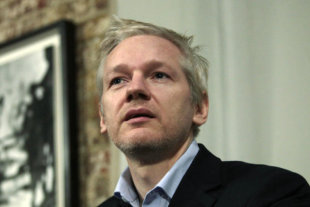
Ecuador grants Assange asylum; UK vows to ‘carry out’ extradition anyway

By Dylan Stableford, Yahoo! News | The Lookout – Thu, Aug 16, 2012

Ecuador's foreign minister announced on Thursday that the country would grant asylum to WikiLeaks founder Julian Assange, defying threats by the British government to storm the Ecuadorean Embassy and extradite Assange to Sweden, where he is wanted for questioning in cases of alleged rape and sexual molestation.
"We have decided to grant political asylum to him," Ricardo Patino said at the end of a long televised statement from the Ecuadorean capital of Quito, where he criticized the U.S. and U.K. governments for failing to protect Assange from political persecution.
"The countries that have a right to protect Assange have failed him," Patino said. "[Assange] is victim of political persecution. ... If Assange is extradited to U.S., he will not receive a fair trial."
The foreign minister said that Ecuador asked Sweden to promise it would not extradite Assange to the United States, but Sweden refused.
"Asylum is a fundamental human right," Patino said, adding that "international law" overrides local laws, and that Assange has "the right not to be extradited or expelled to any country."
A crowd gathered outside the Ecuadorean Embassy in London, where Assange, a 41-year-old Australian native, has been holed up since June, to hear the announcement. At least one protester was arrested.
The British Foreign and Commonwealth Office called Ecuador's decision to grant Assange asylum "regrettable."
"British authorities are under a binding obligation to extradite him to Sweden," a spokesman for the office said. "We shall carry out that obligation. The Ecuadorean government's decision this afternoon does not change that."
"We will not allow Mr. Assange safe passage out of the United Kingdom," British Foreign Secretary William Hague said at a press conference. "Nor is there any legal basis for us to do so. The United Kingdom does not recognize the principle of diplomatic asylum."
According to The Associated Press, Sweden summoned Ecuador's ambassador to Stockholm, calling the decision to grant asylum to Assange "unacceptable."
Moments before the announcement, Ecuadorean President Rafael Correa tweeted: "No one is going to terrorize us!"
It's unclear what will happen to Assange now. U.K. authorities say his asylum is a violation of his probation—and there is reason to believe he would be arrested if he tried to leave the embassy. "Assange is going to Sweden," Louise Mensch, a conservative member of the British Parliament,tweeted. "We are going to extradite him there. That's it and that's all. #rape."
Assange fears that if he were extradited to Sweden, he would immediately be extradited to the United States, which has condemned WikiLeaks' publication of classified documents. Assange and his supporters say the U.S. would charge him with espionage; the U.S. has not said whether or not it would pursue charges against him.
On Thursday, the White House declined to comment on Assange.
On Wednesday, Patino said he received a "clear and written" threat from British authorities who claimed "they could storm our embassy in London if Ecuador refuses to hand in Julian Assange."
"We want to be very clear, we're not a British colony," Patino said. "Colonial times are over."
British officials said they are obligated to turn Assange over to Stockholm.
"The U.K. has a legal obligation to extradite Mr. Assange to Sweden to face questioning over allegations of sexual offenses and we remain determined to fulfill this obligation," a spokesman for the Foreign and Commonwealth Office said in response. "Under British law we can give them a week's notice before entering the premises and the embassy will no longer have diplomatic protection. But that decision has not yet been taken. We are not going to do this overnight. We want to stress that we want a diplomatically agreeable solution."
Britain, the BBC noted, could lift the Ecuadorean Embassy's diplomatic status to fulfill a "legal obligation" to extradite Assange using the Diplomatic and Consular Premises Act 1987:
That allows the U.K. to revoke the diplomatic status of an embassy on U.K. soil, which would potentially allow police to enter the building to arrest Mr. Assange for breaching the terms of his bail.
Such a move, though, would be unprecedented.
In a statement early Thursday, WikiLeaks condemned the U.K.'s threat to raid the embassy:
A threat of this nature is a hostile and extreme act, which is not proportionate to the circumstances, and an unprecedented assault on the rights of asylum seekers worldwide.
In 2010, Swedish prosecutors in Stockholm issued warrants to question Assange about alleged sex crimes involving a pair of former WikiLeaks volunteers. Assange claims the charges are part of an international smear campaign stemming from WikiLeaks' publication of diplomatic cables.
After a brief international manhunt, Assange turned himself in to London police in December 2010. He was granted bail and placed under house arrest. After Assange's appeals to fight his extradition to Sweden were denied, he fled to the Ecuadorean Embassy.
Inside the embassy, Assange "sleeps on an air mattress in a small office that has been converted to a bedroom," according to The New York Times. "He has access to a computer and continues to oversee WikiLeaks, his lieutenants have said."
According to Sky News, Assange watched the announcement from inside the building and welcomed it as a "significant victory," but added: "Things will get more stressful now."
According to WikiLeaks, Assange "will give a live statement in front of the Ecuadorean embassy" on Sunday at 2 p.m. local time.
Filmmaker Michael Moore, one of several Assange supporters who contributed funds to guarantee his bail, applauded the decision, and urged Londoners to demonstrate outside the embassy. "As Americans we were lied [to] by our government about Iraq," Moore wrote on Twitter. "He exposed the truth."
Ecuador, it's worth noting, has a horrible record on press freedom.
And Correa, in particular, has had a "torrid relationship" with the press, Joel Simon, executive director of the Committee to Protect Journalists, wrote in a recent editorial. "His arsenal of repression includes such tactics as pre-empting private broadcasts to denounce the presenters, bankrupting papers through defamation suits, and publicly shouting down critics who dare question him."